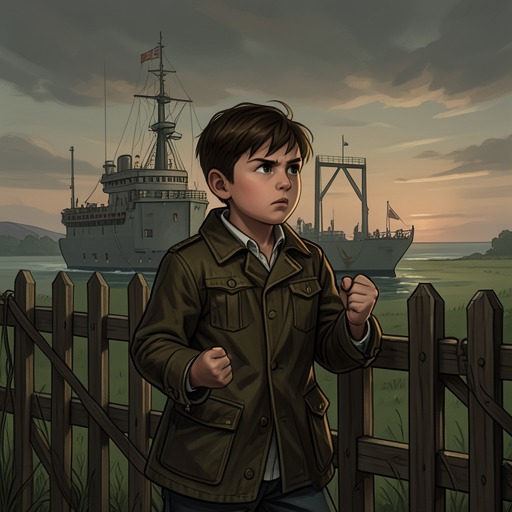
Robert is recaptured and returned to Nybacken
The EmigrantsRobert is recaptured and returned to Nybacken after his first attempt to flee farm service, a brief episode that makes the servant’s lack of control over his movement concrete. At the mill, a chance meal and a report of a drowning bring him close to being mistaken for dead; instead, the miller recognizes him, Aron arrives, and Robert is taken back. His failed escape ends with the wagon choosing the road he had tried to leave, while the episode foreshadows his eventual emigration as a more consequential effort to get beyond the world of service.
Flight Interrupted at the Mill
Robert falls asleep in the mill room amid the heat and monotonous noise. When he wakes, the peasants he had been with have gone; two other farmers are waiting for their flour. Taking him for a farmhand, one offers him bread and pork. The kindness is incidental, but the conversation that follows changes the scene: the farmer reports that a young servant bound for Nybacken drowned in the mill creek that morning, and says the victim was Nils’s son from Korpamoen.
The news makes the danger of recognition immediate. Robert understands that he may be identified and decides he cannot stay. He wants to reach Karlshamn, the coastal town, and hopes to ask one of the farmers for a ride south. Before he can do so, the miller enters and asks whether he is Nils of Korpamoen’s son. Robert’s bare feet and lack of a jacket confirm the miller’s suspicion. The chance to seek help has closed: the miller tells him that his master has arrived after hearing about him from the other farmers.
Aron’s Claim and the Return
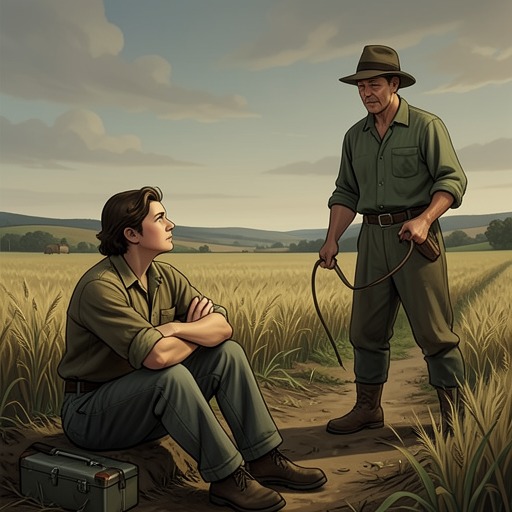
Aron of Nybacken comes into the mill room, recognizes the missing farmhand, and takes hold of his shoulder. Robert gathers his bundles and follows him outside. The narration states the central fact plainly: Robert has been hired according to law and is bound to the man with authority over him. The wagon from Nybacken is waiting, and the master and servant are alone together.
The difference between Aron’s public manner and private authority marks the reversal. In the mill room he speaks gently, presenting the return as if Robert had merely lost his way and needed help finding Nybacken. Once they are outside, Aron takes hold of Robert’s ear and rebukes him for trying to leave before beginning his service, for letting others believe he had drowned, and for causing a search. He invokes Robert’s duty to honor his parents and obey his masters. The episode shows how a power relation can be enforced through both the law and the master’s personal control, even when the master initially presents himself as kind.
A Road Reversed
Aron gives Robert a small box on the ear. The novel records the punishment without making it the whole of the encounter: Robert remains standing, understands that the blow could have been harder, and is taken back in the wagon. At the bridge over the mill brook, the wagon follows the right-hand road, while Robert had taken the left that morning. The route becomes a precise image of the outcome: his attempted departure has not carried him toward the coast but has returned him to the place he meant to escape.
The episode closes by naming this as the day Robert first tried to take steps on the road to America. That phrasing makes the failure part of a longer trajectory rather than a completed escape. He has discovered the direction he wants to go, but not yet found a way to travel it. In the later movement toward emigration, the difference is not simply distance: Robert will need to leave the legal and social conditions that let a master reclaim him.
Service as Confinement
Robert’s return leads into the daily structure of life at Nybacken. He is the youngest worker, and the members of the household all give him chores, hurry him, or correct him. Much of the work centers on four horses: he must tend them morning and evening, clean their stalls, bring hay and oats, prepare fodder, and carry water. The account places the hired hand beside the animals, bound to the repeated demands of their care.
Time is restricted as well as labor. A servant’s year lasts 358 days, with one free week. During Robert’s first week at Nybacken, he decides he must escape from his masters, human and animal alike. His first attempt at the mill is therefore not an isolated impulse; it exposes the condition he is trying to leave. The return restores him to that condition, while the failed road toward Karlshamn foreshadows a later, larger departure.
Narrative Significance
The scene joins two mistaken possibilities: Robert might have remained an unidentified runaway, or he might have become the drowned son described by the farmer. Instead, his identity is recognized and he is returned to service. The sequence turns a meal offered in kindness into the occasion for his discovery, and the report of the drowning briefly places escape and death beside one another without making Robert’s own fate uncertain.
The mill brook and the diverging roads give the episode its shape. Robert’s first movement toward America is reversed before it can become a journey, and the wagon carries him back under the authority he hoped to evade. Later, when the family prepares to emigrate, the practical burden of leaving appears in the tools, food, clothing, and bedding packed for the crossing. Here, by contrast, Robert has only his bundles and a direction in mind. The failed attempt establishes both the force of the constraint and the persistence of the wish to leave.